
Even if you’ve visited the Library Of Congress, this  app is an exceptional tool to help you get a better sense of the history and magnificence of the world’s largest library. It’s an invaluable tool for students researching the facility and would even be useful for self-guided tours. Beyond information about the library itself, the app offers several related links for each subject (which go to the LOC web site). These are helpful, but it would have been nice to have this information included (and formatted) as part of the app, rather than an external link, which detracts slightly from the experience.
Tag Archives: iPad
The Money Making Game #1: Nintendo’s $300 Handheld
We certainly have no problem getting caught up in the fun of playing games, but the people who create them have their pocketbooks to worry about, too. In 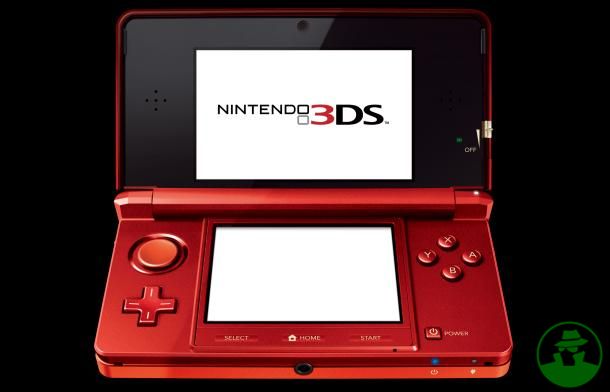 this column, finance expert and GameSpy contributor Chris Morris guides you through the tricky corridors the gaming industry’s financial side, touching on big-time business decisions and how they matter to the common gamer.
When Nintendo announced the price of the 3DS, jaws dropped. 25,000 Yen converts, as you undoubtedly know by now, to just under $300 — a figure the gaming world howled was too high. Many gamers initially assumed the system would carry the same price tag when it hit the states, and the outrage increased. Analysts and industry observers predicted (after currency conversion and other factors) that the U.S. launch price would likely be closer to $250, but this did little to mollify people.
What many people tend to ignore or forget, though, is that Nintendo made some enormous pricing mistakes with the Wii — leaving millions of dollars on the table. And with the 3DS, the company’s taking steps to ensure it doesn’t repeat those gaffes. $250 (or even $300, if the company decides to surprise everyone and roll the dice) is, admittedly, an extraordinarily high price for a handheld gaming device… particularly one that has a single function. And this pricing strategy could backfire and give Apple a window to increase its market share. But from a pure business standpoint, it’s a sure way for Nintendo to regain the confidence of its investors.
App review: tChess Pro
Chess may be known as the sport of kings, but tChess Pro isn’t first in line for the crown. While the chess engine is a good one against which to practice your skills, a clumsy menu system detracts from the experience. That could drive away fans of the game. Beginners, meanwhile, will probably get frustrated fast, since (despite a tutorial mode) there’s not a lot of handholding. The app’s $4.99 price tag is also a bit high, given its lack of polish. With some interface updates, though, tChess Pro could shine.
App review: Grimm’s Rumpelstiltskin – 3D Interactive Pop-up Book
Grimm’s Rumpelstiltskin – 3D Interactive  Pop-up Book brings the digi-novel to children, not only telling the classic story, but adding interactive pop-up elements that children will love to play with. The art is very well-done and the presentation is well-paced. The current version of the app, though, lacks a few features — most notable, it does not read the story aloud. Children or parents will need to do so (and the dense language of the Grimm Brothers may slow some kids down). An update is being worked on, though, that developers say will add narration – and could boost the app’s educational elements.
App review: Dora the Explorer Coloring Adventures
Dora the Explorer Coloring Adventures  is a fun diversion for kids, but doesn’t have a lot of depth to it. Five scenes are available for children to paint, and there are a number of different stickers, but to restart a painting, you first have to erase all the work that was previously done, which could annoy some kids. (You can, however, save images in the iPad’s photo album.) The app won’t really give kids a true creative outlet, and may not hold their attention for long.
App review: Symmetry Shuffle
Symmetry Shuffle is a much harder game than it initially seems  to be — but that’s not a negative for die-hard puzzle fans. The game’s premise — moving objects around on screen — is basic, but players quickly learn that there’s strategy involved. There are two modes: Timed and Solve. The former is a stress-filled affair, challenging you to solve puzzles and advance before time runs out. The other is more casual, letting players learn the game and begin to figure out their strategy. In either mode, though, hours can slip by as you try to figure out the best methods to win. It is a great app for challenging kids to use higher level thinking skills.
Blackberry gets into the tablet computer race
Research in Motion, the company behind the Blackberry , is still fighting Apple tooth and nail in the smartphone market – and it’s not planning to cede the tablet space to the company, either.
The company today unveiled its Playbook tablet, a 7-inch 9.7mm-thick device that’s due early next year in the U.S., with plans for an international roll-out in the second quarter of 2011.
App review: The Price is Right HD
The Price is Right has always been  a show about subtle advertising, but it’s not something you have to pay to watch. Paying a few bucks for an app that then proceeds to bombard you with commercial placements is a bit extreme, though. While the game is well-paced and offers a variety of unlockable mini-pricing games and play modes, it’s not entirely stable, sometimes crashing without warning (though this will likely be fixed in updates). Playing with a friend in multiplayer mode is more fun than playing by yourself.
App review: Press Your Luck HD
The television version of Press Your Luck is cheesy fun — and the app has the potential to match that. Unfortunately, the current version is a buggy game that’s prone to locking up and has a very limited number of questions. After you play just two rounds, you’ll start hearing questions repeated. The single-player version is fairly boring, since the automated contestants pick answers seemingly at random — and are never intellectual threats. (In one round, for example, the automated contestant guessed that Muhammad Ali was best known as a scientist.) Multiplayer, which is all done locally and not through online matchmaking, is a bit more fun, but still nothing incredible. Finally, the game moves at an incredibly slow pace — and the host’s continually repeated comments get old fast.
App review: Stick Stunt Biker
Stick Stunt Biker is an over-the-top racing game that makes motocross look like a ride around a parking lot. The game features impossible jumps and bone-shattering crashes in a cartoon manner that is actually a lot of fun, at least for a while. It’s not an easy game, but the frustration of failure is mitigated by the cringe-inducing experience of seeing the stick figure racer tumble to the ground. The app might use a realistic physics engine to portray those crashes, but there’s nothing close to real about the rest of the game. It’s fun initially, but after a while, the repeated crashes get old and the varying tracks don’t really incentivize you to keep playing. Ultimately, Stick Stunt Biker is a fun diversion, but nothing that will top your list of favorite apps.
 Chris Morris: Journalist