The best video game deals on Black Friday

Those brave enough to dive into the early morning insanity of Black Friday can find TVs, computers and smart phones for mere pennies on the dollar.

This year, though, some of the best bargains will be found on video games. As the industry struggles to boost retail sales and consoles hit middle age, the discounting on some of the year’s best titles will be hard to resist — assuming you’re willing to wake up early for the doorbuster specials.

Read more at Yahoo! Games

Video game ratings board to add apps to its duties?

The Entertainment Software Ratings Board is about to expand its territory.

The ESRB and CTIA (Cellular Telecommunications Industry Association) have called a press conference for next week to announce a new rating system for mobile applications – an area the video game ratings board has had an interest in for some time.

Read more at Variety’s Technotainment blog

The Money Making Game: SOE’s F2P Shift

We certainly have no problem getting caught up in the fun of playing games, but the people who create them have their pocketbooks to worry about, too. In this column, finance expert and GameSpy contributor Chris Morris guides you through the tricky corridors the gaming industry’s financial side, touching on big-time business decisions and how they matter to the common gamer.

On the surface, giving your product away for free – especially if it has been a revenue generator for you for years – doesn’t make a lot of sense. But sometimes, that sort of radical move can be the kick in the pants aging games need to become relevant once more in an increasingly crowded marketplace.

Case in point: Sony Online Entertainment, which may not have started the MMO trend, but certainly was the first to truly capitalize on it, has been spending a lot of time lately exploring the free-to-play business model, converting a pair of games that have historically charged monthly subscription fees. And the early trends are astonishingly encouraging.

Read more at GameSpy

Monster game ‘Rampage’ to become monster movie

The retro craze is going big.

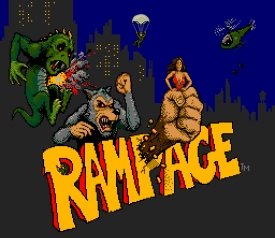
New Line Pictures has announced that it plans to make a cinematic adaptation of Rampage, the 1980s arcade game that centered entirely around three giant monsters with a penchant for demolishing buildings, punching tanks, and eating people, food, and toilets.

That said, it still sounds better than Jack & Jill.

Read more at Yahoo! Games

eBook publisher looks to revive serial model

The Saturday morning serial model of the 1950s may be long dead in the film world, but a new eBook publisher is looking to bring it back in a more modern form.

Backlit is producing a string of Young Adult fiction in eBook form, recruiting Hollywood writers to pen the tales, which invariably end with a cliffhanger. It’s a model that, if it works, not only guarantees a fairly predictable revenue stream, but has caught the eye of producers.

Read more at Variety’s Technotainment blog

App Review: Zombieville USA 2

If you’re looking for a plot-driven zombie game, Zombieville USA 2 isn’t it. If, however, you’re looking for a straightforward battle against hordes of the undead, it’s right up your alley. The violence in the game is nonstop, but cartoonish — almost cute. And the selection of weapons is refreshingly wide. What’s best about the game is there’s no set way to play. You can storm into the thick of battle, guns blazing, or spend most of the level’s allotted time running away.

Especially noteworthy is the game’s cooperative play mode (via Bluetooth or Wi-Fi), which makes it a social app. And kudos to the developers for bypassing the easy in-app purchase route, forcing players to earn their upgrades.

Read more at Common Sense Media

Game Review: uDraw Studio: Instant Artist

The expansion of uDraw to the PS3 and Xbox 360 brings a very family friendly option to both systems and opens up the artistic side of both. This game (which is also available as a standalone title for the Wii) is broken into three parts, each of which emphasizes self-expression in a different way. Art Camp lets kids participate in a half-dozen activities, such as paint-by-numbers and dot-to-dot pictures — as well as an arcade-like game where you whack aliens who fly across the canvas. (It’s a cute idea, but not a lot of fun.)

Art Studio is literally an open canvas, letting players use the game to create whatever they’d like via the peripheral. And Art School is a very thorough tutorial full of instructions on how to improve your art skills, covering all of the basics of art and design. The interface keeps tools on screen; and players can share and send images. While it’s a wonderful artistic tool, the peripheral isn’t perfect. The cord feels short and users will fight against it from time to time, which can be annoying — and drawing on a peripheral in your lap, while watching it appear on screen isn’t any easier than it was on the 2010 Wii game of a similar name. (Should you own that one, there’s more to this game, but probably not enough to justify paying full price.)

Read more at Common Sense Media

Opinion: Cutting Through The Hype On The ‘Xbox 720’ Rumors

Looking at recent rumors of the Xbox 360’s successor supposedly poised to surface soon, Gamasutra’s Chris Morris explains why neither consumers nor publishers should really want a next generation at this point.

New consoles are one of the favorite topics of the rumor mill – and over the past couple of weeks, the system has been grinding out a seemingly endless stream of speculation and anonymously tipped whispers about the next generation.

Microsoft, specifically, has been in the spotlight, with several reports saying the company plans to unveil the Xbox 720 (or Xbox Next or whichever clever naming scheme you prefer) as early as next year – and perhaps release it before the next holiday sales rush.

Read more at Gamasutra

Dan Houser On How Rockstar Does It

Rockstar Games co-founder and vice president of creative Dan Houser doesn’t spend a lot of time on the interview circuit, and you’ll almost never find him on a panel of industry experts. Instead, he prefers to let the company’s work do the talking.

In this rare interview, Houser outlines how the company makes its decisions — from booting Max Payne into the future to deciding not to give players much of a window into its games prior to their release. He also discusses lessons learned from Red Dead Redemption and the creative bible for the Grand Theft Auto series.

Read more at Gamasutra