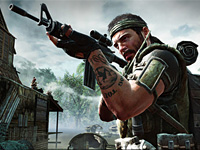
Supreme Court: First Amendment covers video games

In a landmark ruling, the U. S. Supreme Court Monday declared video games are protected forms of free speech, striking down a controversial California law that that attempted to restrict the sale of some titles to minors.

The state argued that violent games are harmful to children and, as such, their sale should be restricted. California took a slightly different approach than other states who have attempted to pass similiar laws, though, by including violent games in the same category as cigarettes and adult magazines. The Court strongly rejected the argument.

Read more at Yahoo! Games

High court strikes down Calif. vidgame law

Violent video games are protected forms of free speech, the U.S. Supreme Court ruled today.

In a 7-2 ruling, the Court struck down a controversial California law that attempted to restrict the sale of violent games to minors.

“Video games qualify for First Amendment protection,” the Court said in its ruling, written by Justice Scalia. “Like protected books, plays, and movies, they communicate ideas through familiar literary devices and features distinctive to the medium. And ‘the basic principles of freedom of speech . . . do not vary’ with a new and different communication medium.”

Read more at Variety.com

Violent Video Games Can Be Sold to Minors: Supreme Court

The U.S. Supreme Court has struck down California’s attempt to restrict the sale of violent video games to children, saying the state’s controversial 2005 law was a violation of free speech.

In a 7-2 ruling, the court said that despite California’s argument that strict scrutiny laws (which govern the distribution of adult entertainment to minors) should apply to this sort of material, the First Amendment protections outweighed those concerns.

Read more at CNBC.com

Analysis: What’s Taking So Long With The Supreme Court Video Game Case?

[In this analysis piece, Gamasutra editor-at-large Chris Morris looks at why the Supreme Court hasn’t come to a decision yet on California’s violent video game bill seven months after its hearing.]

There’s a gong in the offices of the Entertainment Software Association that hasn’t been rung for a long time.

It’s called the Supreme gong – and the rule of the office is that it shall remain silent until the Supreme Court announces its ruling on Brown v. EMA (formerly known as Schwarzenegger v. EMA). Justices heard oral arguments for that case last November, but seven months later, they have yet to hand down a decision. What’s going on?

Read more at Gamasutra

E3 2011: Where’s the Supreme Court verdict?

Last November, the Supreme Court of the United States heard oral arguments in a case that could have a massive effect on how the video game industry operates. But nearly seven months later, we’re still waiting for a ruling.

The Court once again did not issue a ruling on Brown v. EMA Monday morning, which mildly surprised some industry observers who had expected it to come down as the industry starts its annual trade show. The next opportunity for a ruling in the case will come Thursday, as E3 kicks off its last day.

Read more at Variety’s Technotainment blog

Gamasutra’s Best Of 2010: Top 5 Unexpected Gaming Events

[In a light-hearted post-Christmas countdown, Gamasutra editor-at-large Chris Morris examines the unexpected moments of 2010 in gaming, from Justice Kagan on Mortal Kombat to Panasonic’s Jungle.]

Talk about a topsy-turvy year. The video game industry has weathered its share of good and bad in 2010, but what made things really interesting were the completely unexpected moments – things we could never have predicted, no matter how many clues we were given.

From THQ’s decision to launch an experimental pricing strategythat could lob $20 off the price of games if it’s successful, to the return of a circus-like E3 environment (topped by Activision’s Lollapalooza-like concert), there were plenty of shocking moments in 2010.

Read more at Gamasutra

The Year In Review: Game Biz Analysts On The Worst Happenings Of 2010

Having picked the brains of Wall Street analysts on the best things to happen in the video game industry in 2010, there was no way we were going to let them go without talking about the worst as well.

This year, after all, might end in positive territory when all is said and done, but it’s going to be tough to look at it as a winner from several perspectives. Retail sales continue to spiral and developer-publisher relations took another blow to the chin. Meanwhile, stock prices of publicly traded game companies continued to lag.

Here’s what the analysts thought went wrong in 2010.

Read more at Gamasutra

Supreme Court hears challenge to vidgame ban

Supreme Court justices grilled both sides of the vidgame violence issue Tuesday as the high court heard oral arguments on the challenge to California’s ban on sales of such games to minors. Justices ultimately seemed skeptical of the constitutionality of the law enacted in 2005.

The members of the court seemed concerned about the First Amendment impact of siding with California in the case, Schwarzenegger vs. Entertainment Merchants Assn.

Read more at Daily Variety

Analysis from the Supreme Court: Schwarzenegger v. EMA

Gamasutra editor-at-large Chris Morris offers analysis and highlights of Tuesday’s Supreme Court hearing over the California violent game bill, explaining why it’s “still much too early to start celebrating.”

The video game industry might be able to release some of that deep breath it has been holding since the Supreme Court agreed to hear arguments in Schwarzenegger v. EMA – but it’s still much too early to start celebrating.

While Justices did seem to side with the video game industry in their questions, by no means did they give EMA attorney Paul Smith a free pass – peppering him with questions about the harmful effects of video game violence and scolding the industry for seemingly shrugging off reports from organizations that indicate there is an effect on children.

Read more at Gamasutra

Supreme Court Debates Video Game Violence

Supreme Court Justices grilled attorneys Tuesday on the issue of video game violence, but seemed to preliminarily side with the video game industry on First Amendment issues.

The case – Schwarzenegger v EMA – revolves around a 2005 California law that made it illegal for retailers to sell violent video games to anyone under 18.

Read more at CNBC.com