Zynga’s in the black – but for how long?

While the gaming world was busy watching THQ implode last week, a funny thing happened in the background. Zynga began trading in positive territory.

Boosted by Facebook’s IPO filing, the social games maker finally escaped the mire of mediocrity it had been stuck in since its first day as a public company and began to grow. The question is: Is it a short-term surge or the start of a true growth curve?
Read more at Gamasutra

Analysis: What’s next for THQ?

Troubled publisher THQ is massively reorganizing itself yet again, but is the elimination of its licensed kids’ games and 240 members of its staff enough to convince shareholders that the company means it this time?

The cloud hovering over THQ’s corporate head got a lot darker Wednesday – and the long-term forecast is pretty uncertain.

While there’s certainly nothing happy about 240 employees losing their jobs and it’s never a good sign when a CEO slashes his own salary, the actions could be the start of what THQ needs to do to ensure its long-term survival. But they may not be the end.

Read more at Gamasutra

How accurate are Madden’s Super Bowl predictions?

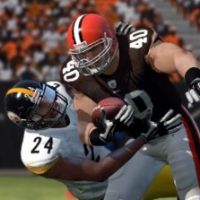
While Electronic Arts has never let a good PR opportunity slip past, it might be a mistake to dismiss the company’s annual Super Bowl predictions. Gamasutra’s Chris Morris takes a look at Madden’s past results.

While Electronic Arts has never let a good PR opportunity slip past, it might be a mistake to dismiss the company’s annual Super Bowl predictions.

While the Madden prognostications are certainly a final attempt to move software before interest in the football category falls off a cliff until August, the game is eerily accurate when it comes to determining the winner of the big game.

Read more at Gamasutra

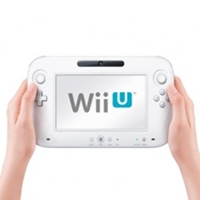
Opinion: How NFC tech could be Wii U’s saving grace

From new ways to play Pokemon to new ways to pay for Pokemon, the Wii U’s newly-revealed NFC feature lays the groundwork for new business and gamplay opportunities for Nintendo and its partners.

Things haven’t been looking especially rosy for the Wii U over the past few months.

E3 crowds were interested in getting their hands on the company’s next generation console last June, but that’s fairly common for new gaming tech. For the rest of the world, the system didn’t seem to have a real hook they could sink their teeth into.

Read more at Gamasutra

Analysis: THQ revamps its business strategy a few years too late

THQ’s announcement Wednesday morning that it was abandoning the kids’ licensed video game industry shouldn’t really have come as a surprise to anyone who has been watching the company lately, but it’s still a move that’s going to alter the structure of the industry.

While it has desperately been trying to change its image for years, THQ is still largely known for its kiddie games. That is, after all, what happens when your company builds its fortunes on titles for the toddler set. The decision to shed that facet of its identity might be coming too late to have a dramatic impact, though.

Read more at Gamasutra

Analysis: THQ’s financial troubles may get worse before they get better

It may be the industry’s fourth-largest third-party publisher, but with financial woes and no inspiring product schedule to alleviate them, THQ could be facing a possible NASDAQ delisting.

THQ just can’t catch a break these days.

While whispers of the company canceling its entire 2014 lineup were quickly discounted by the company, it can’t deny the dire state of its stock.

Read more at Gamasutra

CES: ePawn’s Arena a bit of Skylanders, a bit of board gaming

Activision proved there was a market for small, real-world items interacting with a virtual environment with its toy-based video game Skylanders. Now a French technology company is hoping to expand on that idea.

ePawn is demonstrating a new technology — called the Arena — at this week’s Las Vegas-based Consumer Electronics Show, which it hopes to ship to retail by this holiday. And it’s something of a doozy.

Read more at Gamasutra

ESA and SOPA: Between a rock and a hard place

The Stop Online Piracy Act is front and center in the headlines again, as opponents to the legislation shine the spotlight on companies and organizations supporting the bill, giving the ESA one massive headache.

It can’t be a lot of fun working at the ESA these days.

SOPA – the Stop Online Piracy Act – is front and center in the headlines again, as opponents to the legislation shine the spotlight on companies and organizations supporting the bill. That, predictably, has whipped up the forces of Anonymous and other shadow groups, who are calling for DDoS attacks and other forms of public shame.

Read more at Gamasutra

Gamasutra Best Of 2011: Top 5 Disappointments

[From First Amendment rights to high-quality games, 2011 was a great year for video games. But not everything was rainbows and unicorns. Gamasutra’s Chris Morris looks at some of the year’s low points.]

2011 was a great year for gaming. There’s really no debating that.

After years of being a political pinata, it finally received indisputable First Amendment protections. It had one of the strongest title lineups in recent memory. And new types of interactive entertainment started to show signs of maturity.

But into every life — or year, in this case — a little rain must fall. Here are five things we really wish had been handled better (or differently) this year:

Read more at Gamasutra

The Worst Things To Happen To Games In 2011 (According To Analysts)

[From layoffs to the rise of freemium/smartphone gaming, several analysts share their biggest game industry disappointments and unhappy trends of the year with Gamasutra.]

Analysts, by nature, are critical beings, so having heard their thoughts on the best things to happen in the gaming industry this year, we definitely wanted to hear what they thought had gone wrong.

Retail sales are set to record their third consecutive year of declines, after all – and while some companies have seen their stock prices rise (congratulations EA!), others continue to lag.  Here’s what Wall Street’s most notable game industry analysts thought went wrong in 2011:

Read more at Gamasutra