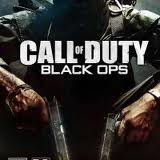
Analysts: Retail Game Sales Unlikely To Recover In 2011

[Gamasutra editor-at-large Chris Morris talks to game industry analysts on what 2011 might bring for the struggling Western retail game biz — with predictions of another slump in retail sales that might only be forestalled by the launch of Nintendo’s 3DS, a “primary driver” of any possible retail rebound.]

There’s good news aplenty from gaming companies these days – but as financial analysts begin crunching the numbers for next year, many fear that the holiday cheer could be short-lived.

The shifting business models of the Western video game industry will continue to impact retail sales figures, even with the relatively easy comparables 2010 has established, say many analysts. The good news is that digitally downloaded content should continue to grow – and help make up some of the difference.

Read more at Gamasutra

Analysis: The State Of The Nation At Nintendo

[Gamasutra editor-at-large Chris Morris examines the surge in Nintendo’s U.S. sales around Black Friday, and asks whether this holiday season turnaround is enough to influence the company’s slowing growth curve.]

Over the course of the past year, gamers and the gaming press have written Nintendo off as a company in steep decline; hailed it as the savior of the handheld industry; written it off again (a couple of times, in fact); and called it greedy.

With Tuesday’s release of the 2010 Black Friday sales figures, the winds have shifted once again and Nintendo is now being called a powerhouse. The latest moniker is, of course, a temporary one – but it begs the question: exactly what is going on with Nintendo these days?

Read more at GamaSutra

Interview: TimeGate’s Chaveleh Takes Control Of His Publishing Destiny

[Gamasutra catches up with Timegate Studios (Section 8) head Adel Chaveleh as the veteran console game development house growss “tired” of the traditional publisher relationship and strikes out on its own.]

As production costs escalate and the market becomes tighter, independent developers are increasingly finding their options limited.

They can partner with large publishers on a per-game level – but if the publisher has an internally-built title competing in that genre, it often means their games receive a smaller marketing push. They can join the fold, agreeing to an acquisition. Or they can roll the dice and self-publish.

Read more at Gamasutra

Interview: Activision’s Hirshberg On Black Ops, Tony Hawk: Shred And More

Gamasutra’s Chris Morris talks to Eric Hirshberg, CEO of Activision about why, despite a stronger opening week, the company predicts total sales of Call of Duty: Black Op will fall below those of last year’s Modern Warfare 2.

As Treyarch and Activision’s Call Of Duty: Black Ops continues to smash entertainment industry records, analysts who cover Activision are scrambling to up their year-end sales predictions. At the publisher, though, things haven’t changed.

Despite the fact that Black Ops sales are tracking 18 percent ahead of where Infinity Ward’s Modern Warfare 2 was at this point it its life cycle, Activision is still officially estimating that the game’s performance will fall just short of last year’s sales totals.

Read more at Gamasutra

In-Depth: Sony Threatens Microsoft’s Non-Gaming Dominance

[As Sony announces a tie-up with Vudu for HD movie streaming, Gamasutra editor-at-large Chris Morris looks at how the PlayStation 3 creator has started to gain ground on Microsoft’s array of on-console media content — the next big battlefield for game consoles.]

Long before Kinect, Microsoft had its own way of courting the non-gamer – offer functionality on the Xbox 360 that was unique enough to lure in people who weren’t interested in the latest Haloinstallment. And it was a pretty effective method.

With Netflix integration leading the charge in 2008, the Xbox 360 finally fulfilled the dream of the console as a Trojan horse of the living room. It gave the company a huge competitive advantage for a while, but recently that advantage has been slipping away. Sony, in particular, has gained a lot of ground in that battle and is threatening to overshadow Microsoft’s achievements.

Read more at Gamasutra

Interview: CEO Farrell On THQ’s Path Through The Changing Game Landscape

[Gamasutra’s Editor-at-Large Chris Morris spoke to THQ CEO Brian Farrell as the company ramps up its digital distribution business while experimenting with lower price-points for boxed product.]

THQ and the broader video game industry have a lot in common. Both have struggled financially in the past couple of years. Both are seeing their role in the greater entertainment landscape change. And both are seeing the evolution of financial models that have served them well for years.

Leading the charge for those changes at THQ is CEO Brian Farrell. He’s in the unenviable position of leading a company that’s in the midst of what he calls a “turnaround year” – with significant growth not expected to resume until 2012. To get the company to that point, though, he’s throwing out a lot of the industry’s standard practices and he’s raising a few eyebrows in the process.

Read more at Gamasutra

Analysis: What Lies Ahead For Call of Duty?

[Gamasutra editor-at-large Chris Morris looks forward from the tumultuous midnight launch of Call Of Duty: Black Ops to ask where Activision’s franchise goes from here, examining what Infinity Ward’s shifts mean for 2011’s CoD installment and beyond.]

As bleary eyed GameStop employees recover from last night’s midnight launches and fans begin tearing through Call Of Duty: Black Ops, Activision’s phenomenally successful franchise stands at something of a crossroads.

The fate of Black Ops is hardly in doubt, of course. Pre-orders are already telling us that it will dominate software industry sales this year. And while Activision is publicly saying it doesn’t expect the game to meet Modern Warfare 2’s numbers, several analysts feel that’s just the company taking a conservative stand to protect itself against investor backlash if the numbers really do fall short.

Read more at Gamasutra

Opinion: Despite Flaws, Kinect May Be Just The Thing For Microsoft

[Gamasutra’s Chris Morris looks at the factors that will dictate Kinect’s market prospects at launch and down the line, opining that Microsoft’s holiday season looks secured — but that it “might have screwed some of its partners in the process.”]

Two months ago, when Sony’s PlayStation Move hit shelves, I wondered whether Sony had lost its mind. The device, I mentioned, wasn’t intuitive and had some alarming aesthetic issues – a combination that could hurt its chances with the mainstream audience.

Now Kinect has arrived – and while it has just as many problems as Move, it seems poised to thoroughly trounce its competitor this holiday season.

Read more at Gamasutra

Analysis from the Supreme Court: Schwarzenegger v. EMA

Gamasutra editor-at-large Chris Morris offers analysis and highlights of Tuesday’s Supreme Court hearing over the California violent game bill, explaining why it’s “still much too early to start celebrating.”

The video game industry might be able to release some of that deep breath it has been holding since the Supreme Court agreed to hear arguments in Schwarzenegger v. EMA – but it’s still much too early to start celebrating.

While Justices did seem to side with the video game industry in their questions, by no means did they give EMA attorney Paul Smith a free pass – peppering him with questions about the harmful effects of video game violence and scolding the industry for seemingly shrugging off reports from organizations that indicate there is an effect on children.

Read more at Gamasutra

Analysis: Consoles And Kids – The Generation Gap

[In this analysis, Gamasutra editor-at-large Chris Morris discusses the potential resurgence of ‘edutainment’ games, talking to Southpeak and examining Warner Bros’ moves into the relatively neglected category.]

There is, I will admit up front, absolutely nothing sexy about edutainment titles. Hell, even the name is dull – and sounds like it belongs in a boardroom, alongside words like ”synergy” and “paradigm”.

Core gamers won’t look at ‘em. Kids like ‘em fine until someone spills the beans about them being educational. And, since so many are targeted at toddlers and young kids (a very niche audience), they’re not exactly barnburners when it comes to a publisher’s bottom line.

Read more at Gamasutra