Going through the motions: Kinect vs. Move vs Wii

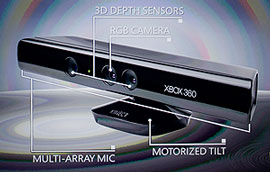
Nintendo pioneered the motion gaming movement with the Wii. In September, Sony tried to better the experience with Move. And on Nov. 4, Microsoft will begin selling Kinect, which does away with controllers altogether. That’s when the battle will really kick into overdrive.

As holiday shoppers prepare their lists this year, they’ll be subjected to marketing blitzes and in-store kiosks for all three technologies, each hoping to separate people from their money. It’s the new front line for gaming companies and no one wants to be left behind.

Trying to decide which, if any, of these motion gaming experiences is right for you? We’ve broken down the pros and cons of each to make it easier.

Read more at Yahoo! Games

Video Games on Holiday Wish Lists 2010

Retail sales might be in the tank, but that doesn’t mean 2010 has been a year of bad video games. It’s quite the opposite, in fact.

While shoppers have been more picky about what they buy — and spending more time with games that have extensive multiplayer elements — there are a lot of highly rated titles on shelves and others coming soon. The good news? That makes it easy for gift buyers to find something for everyone.

Here are some suggestions that can’t be overlooked.

See the gift guide at CNBC.com

As new motion controls arrive, will the Wii become obsolete?

For the past four years, Nintendo has the market to itself when it comes to motion control gaming. That’s finally coming to an end – and it has some people wondering about how the company will fare moving forward.

In mid-September, Sony launched PlayStation Move, a motion sensor that mimics – and, in some ways, improves upon – the Wii remote. Come November, Microsoft will join the fight with Kinect, a camera-based system that eliminates the need for controllers altogether.

Read more at Yahoo! Games

Is Motion Control Still the Future of Video Games?

While Nintendo kicked off the motion control revolution four years ago and quickly dominated the field, Microsoft and Sony are betting there’s a lot of life — and money — left in the category.

Last Sunday, Sony’s new PlayStation Move controller went on sale and in November Microsoft will launch Kinect, it’s motion-tracking camera that essentially transforms players’ bodies into the controller. Both products are gambles — and, to some degree, risks — for the companies, who are hoping to keep the current generation of video game systems relevant for several years.

Read more at CNBC.com

The 360’s big show

From the Cirque du Soleil-infused unveiling of Kinect to a solid game lineup for 2010-2011 to the unexpected announcement of a redesigned Xbox, Microsoft had no shortage of surprises at June’s E3 convention. It was, in fact, something of a challenge to keep up with it all. On a macro level, though, their new Xbox 360 offerings can be broken down into four easy-to-digest categories, each with its own level of appeal and promise.

Read more in this month’s Official Xbox Magazine (pdf)

Can motion controllers save the game industry?

2010 hasn’t exactly been a good year for the video game industry. In fact, it’s been pretty lousy so far.

While the quality of major titles has been top-notch – with Red Dead Redemption, Super Mario Galaxy 2 and God of War 3 leading the way – consumers, on the whole, just aren’t buying games.

Read more at Yahoo! Games

Microsoft reintroduces the world to Milo

When Microsoft announced the Xbox 360 motion sensor controller that’s now known as Kinect, the demo that had everyone talking was Peter Molyneux’s “Milo”. Shown in a video (and, later, via a select number of live demonstrations), the onscreen 11-year old boy interacted and chatted with a human player and showed remarkable artificial intelligence.

Milo’s been silent since then, but Molyneux brought him back out recently at the TED conference. A video of his presentation at that event has just been released and it’s worth 10 minutes of your time.

Read more at Variety’s Technotainment blog

Kinect sets its price

Microsoft on Tuesday announced that Kinect, its new gesture-recognition controller for the Xbox 360, will retail for $150 when it hits stores Nov. 4. That is in line with what the gaming world was expecting — but it may make the launch of the long-awaited system a bit less spectacular than people were hoping.

The company says the chief goal of Kinect is to attract new users to the Xbox 360. To achieve this, Microsoft will also offer a larger bundle, which includes an Xbox 360 (with 4GB of storage), a Kinect and “Kinect Adventures” for $299.

Read more at Daily Variety

Kinect price: $150

Looks like the rumors were pretty much spot-on when it came to Kinect pricing. Microsoft has announced that its new gesture-recognition peripheral will retail for $150 when it hits stores this November. That price will include a bundled version of the “Kinect Adventures” game.

Microsoft’s main focus with Kinect is to attract new users to the Xbox 360, so it will also offer a larger bundle, which includes an Xbox 360 (with 4GB of storage), a Kinect and “Kinect Adventures” for $299.

Read more at Variety’s Technotainment blog