Video Games on Holiday Wish Lists 2010

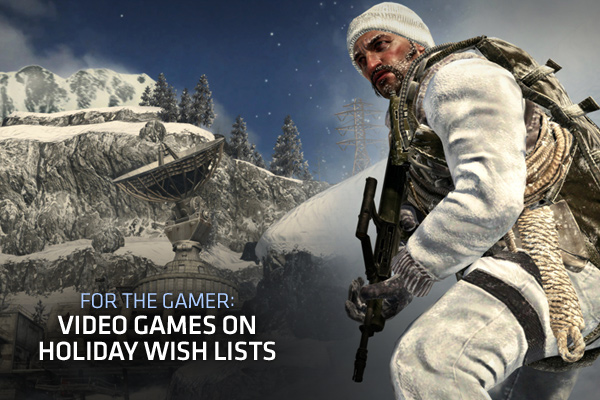
Retail sales might be in the tank, but that doesn’t mean 2010 has been a year of bad video games. It’s quite the opposite, in fact.

While shoppers have been more picky about what they buy — and spending more time with games that have extensive multiplayer elements — there are a lot of highly rated titles on shelves and others coming soon. The good news? That makes it easy for gift buyers to find something for everyone.

Here are some suggestions that can’t be overlooked.

See the gift guide at CNBC.com

Analysis from the Supreme Court: Schwarzenegger v. EMA

Gamasutra editor-at-large Chris Morris offers analysis and highlights of Tuesday’s Supreme Court hearing over the California violent game bill, explaining why it’s “still much too early to start celebrating.”

The video game industry might be able to release some of that deep breath it has been holding since the Supreme Court agreed to hear arguments in Schwarzenegger v. EMA – but it’s still much too early to start celebrating.

While Justices did seem to side with the video game industry in their questions, by no means did they give EMA attorney Paul Smith a free pass – peppering him with questions about the harmful effects of video game violence and scolding the industry for seemingly shrugging off reports from organizations that indicate there is an effect on children.

Read more at Gamasutra

Supreme Court Debates Video Game Violence

Supreme Court Justices grilled attorneys Tuesday on the issue of video game violence, but seemed to preliminarily side with the video game industry on First Amendment issues.

The case – Schwarzenegger v EMA – revolves around a 2005 California law that made it illegal for retailers to sell violent video games to anyone under 18.

Read more at CNBC.com

Video Game Industry to Get Its Day in Court

While most of Washington, DC will be focused on mid-term elections Tuesday, the justices of the Supreme Court will be thinking about video games.

The Supreme Court is schedule to hear oral arguments on Nov. 2 in the case of Schwarzenegger v. EMA, by far the most important challenge – legal or otherwise – the video game history has faced.

Read more at CNBC.com

Take-Two Interactive’s CEO steps down

Ben Feder, the CEO of the company behind “Grand Theft Auto,” “Bioshock” and “Red Dead Redemption” is calling it quits.

Feder has announced plans to resign his post at Take-Two Interactive Software on Jan. 1, 2011. Chairman Strauss Zelnick will assume his duties.

Read more at Variety’s Technotainment blog


Resident Evil creator joins Bethesda

Zenimax Media, the parent company of Bethesda Softworks, continues to expand its talent pool. Shinji Mikami, creator of the “Resident Evil” franchise, has joined the publisher as part of Zenimax’s acquisition of his Tango Gameworks development house.

It’s the latest in a series of big moves for the company, which in the last year has acquired Arkane Studios and id Software and picked up $150 million in venture capital investments.

Read more at Variety’s Technotainment blog


Analysis: Does Going ‘Transmedia’ Help Game Properties?

[Gamasutra editor-at-large Chris Morris looks at how initial releases in game franchises are extending across film, books, action figures and beyond, talking to THQ’s Danny Bilson about the just-announcedHomefront prequel novel and why the “fiercely competitive” market demands that extra transmedia step.]

The video game industry, if you haven’t noticed, isn’t just about games any more.

Sure they’re important, but for many publishers, they’re the hub of a broader entertainment property.

Read more at Gamasutra

The Biggest Video Game Publisher You’ve Never Heard of

Investors in the video game space understandably focus a lot of their attention on the larger publicly traded companies.

Publishers like Activision, Electronic Arts and Take-Two Interactive, after all, have some of the biggest titles in gaming. Privately held publishers, on the other hand, tend to either be based outside of the U.S. or lack a major intellectual property.

Read more at CNBC.com

The Money Making Game #1: Nintendo’s $300 Handheld

We certainly have no problem getting caught up in the fun of playing games, but the people who create them have their pocketbooks to worry about, too. In this column, finance expert and GameSpy contributor Chris Morris guides you through the tricky corridors the gaming industry’s financial side, touching on big-time business decisions and how they matter to the common gamer.

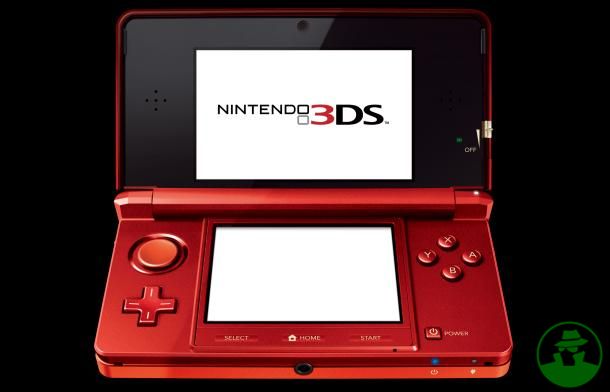
When Nintendo announced the price of the 3DS, jaws dropped. 25,000 Yen converts, as you undoubtedly know by now, to just under $300 — a figure the gaming world howled was too high. Many gamers initially assumed the system would carry the same price tag when it hit the states, and the outrage increased. Analysts and industry observers predicted (after currency conversion and other factors) that the U.S. launch price would likely be closer to $250, but this did little to mollify people.

What many people tend to ignore or forget, though, is that Nintendo made some enormous pricing mistakes with the Wii — leaving millions of dollars on the table. And with the 3DS, the company’s taking steps to ensure it doesn’t repeat those gaffes. $250 (or even $300, if the company decides to surprise everyone and roll the dice) is, admittedly, an extraordinarily high price for a handheld gaming device… particularly one that has a single function. And this pricing strategy could backfire and give Apple a window to increase its market share. But from a pure business standpoint, it’s a sure way for Nintendo to regain the confidence of its investors.

Read more at GameSpy

Redbox makes play for videogames

Having established a position of power in the film rental industry, Redbox is deepening its move into the videogame world.

The company, which has been running a limited test of game rentals, is substantially expanding the experiment, adding game rentals to thousands of its self-service kiosks in the West, Midwest and East Coast.

Read more at Daily Variety