Interview: Tony Bartel On GameStop’s New Digital Strategy

Gamasutra editor-at-large Chris Morris talks with GameStop president Tony Bartel about its recent acquisitions and the company’s potential plans to build its own tablet computer.

After running relatively quiet on the digital front for a long period, GameStop came out with both guns blazing last week.

The surprise purchases of Stardock’s Impulse digital distribution service and streaming technology firm Spawn Labs put the company in direct competition with Steam and OnLive. And it’s just getting started.

Read more at Gamasutra

Interview: SOE’s Smedley On The Company’s Future

Gamasutra editor at large Chris Morris talks to Sony Online Entertainment’s John Smedley about the next generation of EverQuest, NGP development and why “You can bet our future is more console-based than it is PC-based.”

Before Thursday, there was a lot to talk about when it came to Sony Online Entertainment. Then the layoffs hit – and there was only one subject on people’s minds.

Unfortunately, my talk with SOE president John Smedley was held on Tuesday – long before even the rumors of layoffs had begun to swirl. And, not surprisingly, SOE wasn’t making him available after shutting down three of its studios and laying off 205 employees. So while there’s no look as to what led up to the Thursday axings, Smedley was still willing to look into the company’s future in the days leading up to it.

Read more at Gamasutra

Opinion: NPD Sales Reporting Restirictions May Shoot Data Service In The Foot

Veteran game journalist and Gamasutra editor-at-large Chris Morris examines NPD’s moves to limit media access to U.S. video game sales figures, stating NPD “could be undercutting its own relevancy.”

I get why The NPD Group has been clamping down on distribution of its data recently. I really do.

But I’m starting to worry that as the company keeps an eye on its bottom line, it could be undercutting its own relevancy at a time when it’s already under assault.

Read more at Gamasutra

Opinion: Why The Duke Nukem Forever Delay Makes Sense

[In this opinion piece, Gamasutra editor-at-large Chris Morris discusses why the latest delay to Gearbox’s Duke Nukem Forever is actually a good thing, with other upcoming gaming releases taken into account.]

Given the game’s long, dubious history, the latest delay of Duke Nukem Forever shouldn’t have come as a shock to anyone.

It’s certainly not a long one, by Duke standards. And while some doubters in gaming forums across the internet have seized on this as a chance to say “I told you so!,” most fans and developers have barely blinked at the news, except perhaps to tip their hats at the clever way Gearbox announced the news.

Read more at Gamasutra

Interview: PopCap’s Roberts Talks IPO Reports, Why ‘Good Games Are Good Games’

[Gamasutra editor-at-large Chris Morris talks to PopCap CEO David Roberts about the rise of casual gaming, the possibility of an initial public offering for the company later this year, and why Bejeweled’s popularity rises from the fact that “good games are good games.”]

PopCap Games, to borrow (and slightly mangle) a phrase from Barbara Mandrell, was casual when casual wasn’t cool.

Long before companies like Rovio and Zynga were dominating headlines, the Seattle-based development house was building a loyal following with titles like Bejeweled and Bookworm. And that gives it some perspective in this fast-growing market.

Read more at Gamasutra

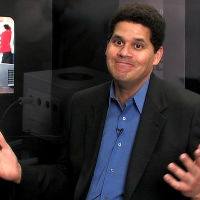
Interview: Reggie Fils-Aime On Garage Devs And The Value Of Software

When Nintendo’s global president Satoru Iwata rocked this year’s Game Developers Conference with his controversial comments about developers of social and mobile games, there were a lot of questions. Was the company showing fear? Was it being too rigid in its thinking? Was Iwata actually right on the money?

A few people, though, were asking a more practical question: If the company felt this new breed of garage developers (like Rovio in its early days or Tiny Wings developer Andreas Illiger) were undervaluing their games, why not establish an opportunity for them to sell to the Nintendo audience at higher prices?

Read more at Gamasutra

A Postcard From SXSW: A New ‘Lord British’ Game In The Texas Sun

Gamasutra editor-at-large Chris Morris reports from this year’s South by Southwest, discovering a Richard Garriott-pitched Lord British social game and a host of other game-related aspects to the Texas media conference.

Music and film might be the dominant forms of entertainment on display at this year’s South by Southwest gathering, but gaming culture is definitely elbowing its way into the party.

Public game demos and several seminars examining the state of the industry have been on display at the Austin Convention Center since Friday – and some developers (including Richard Garriott) are even using the event to announce new titles.

Read more at Gamasutra

Interview: Don Bluth’s Return To Games With Tapper World Tour

Don Bluth will be the first to tell you he’s a filmmaker, not a game maker. But despite the fact that he has just two titles to his credit, the Hollywood veteran has still managed to make a lasting impression on the video game industry.

Dragon’s Lair, in some ways, was the front runner for the modern graphics era. While Dirk the Daring & Co. were hand-animated, the title let players and developers know that games could be just as eye-popping as works on the big screen.

Read more at Gamasutra

Interview: Frank Gibeau on EA’s Expanding Focus In The PC Space

EA’s Frank Gibeau talks to Gamasutra about the company’s position in the casual Facebook gaming market, the renewed focus on PC releases and the increasing dabblings in the freemium business model.

Some publishers are focusing primarily on the online market these days. Others see mobile as the wave of the future. Plenty are chasing the social network audience. And some are sticking doggedly with the traditional game space.

At Electronic Arts, they’re covering their bets.

Read more at Gamasutra

Interview: GameSpy To Offer Its Tech To Indie Developers For Free

GameSpy’s Sean Flinn tells Gamasutra editor-at-large Chris Morris about GameSpy Open Initiative, a new initiative that makes GameSpy’s online game tech available free of charge to small devs.

With its connected gaming technology already integrated into hit titles like Red Dead Redemption, Mario Kart Wii and Crysis, GameSpy is turning its sights to the independent game community.

The company has announced the GameSpy Open initiative, which will make its entire catalog of multiplatform online game technology available free of charge to small development studios. That will allow burgeoning game makers to offer services including cross-platform multiplayer, leaderboards, cloud data storage and community services (such as buddy lists and matchmaking).

Read more at Gamasutra